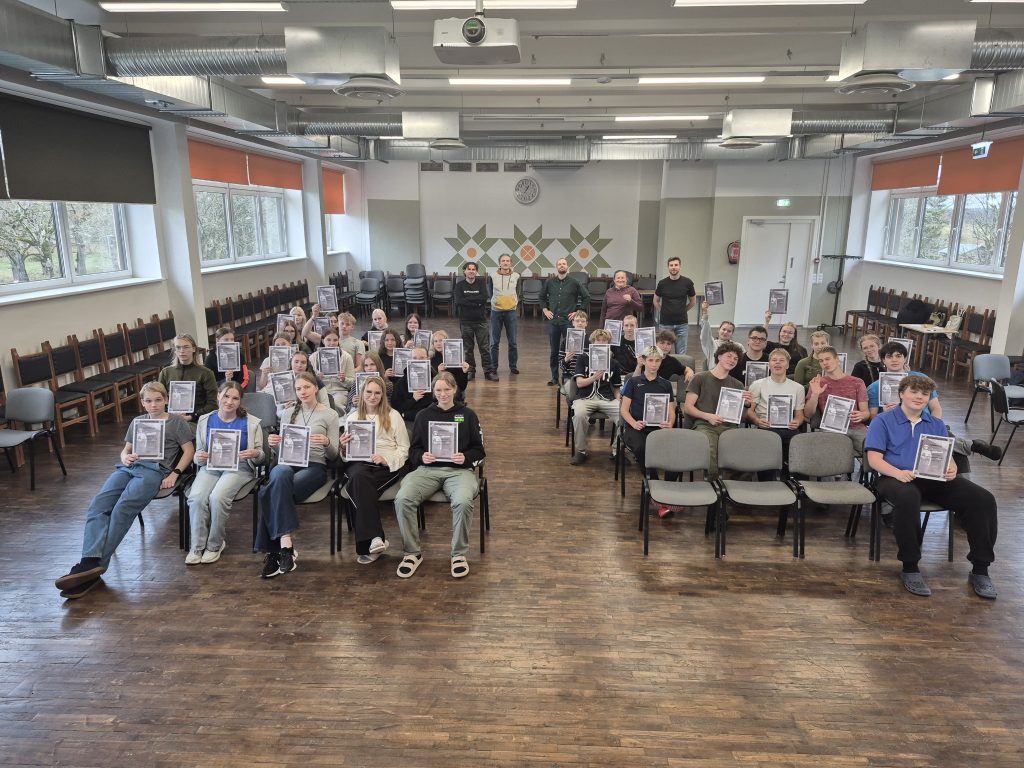

From 29 to 31 October, the Estonian Institute of Historical Memory organised an autumn school dedicated to the Forest Brothers in Vana-Vigala, bringing together 38 students from across Estonia. Interest in the programme was considerable, with more than 80 young people applying to participate. Over three days, participants explored the history of the Forest Brothers and resistance to the Soviet occupation, while also acquiring practical skills for coping with emergency situations.
The autumn school took place at the Vana-Vigala campus of Raplamaa Applied College and in the surrounding area. The programme aimed to provide participants with an understanding of the Forest Brothers movement as one form of resistance to Soviet occupation and to introduce the conditions in which the Forest Brothers operated. Lectures and discussions were complemented by practical exercises, group work and outdoor activities.
Historians Peeter Kaasik, Elmar Gams and Martin Andreller from the Estonian Institute of Historical Memory examined the emergence of armed resistance, the everyday lives of the Forest Brothers and their activities against the Soviet authorities. Particular attention was given to research on the Forest Brothers movement, including archaeological findings that help supplement information obtained from written sources and personal recollections. The programme also explored Soviet propaganda narratives about the Forest Brothers, comparing them with evidence-based historical research. Group discussions based on video testimonies from the Kogu Me Lugu oral history project addressed people’s experiences and choices during the Soviet occupation.
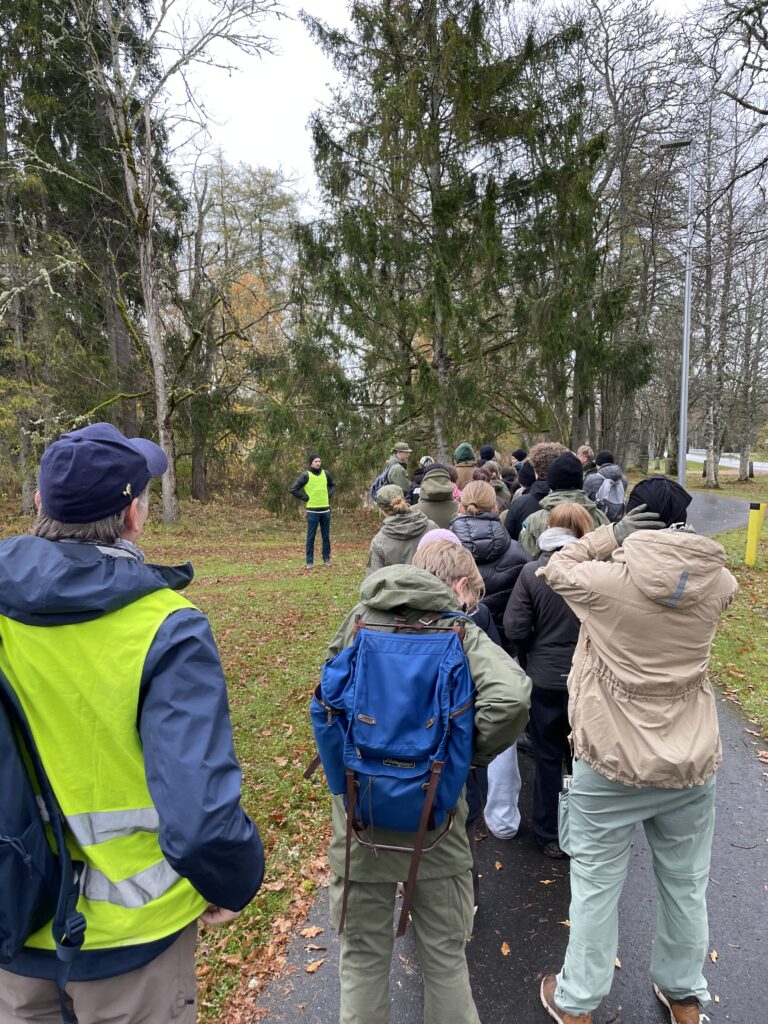
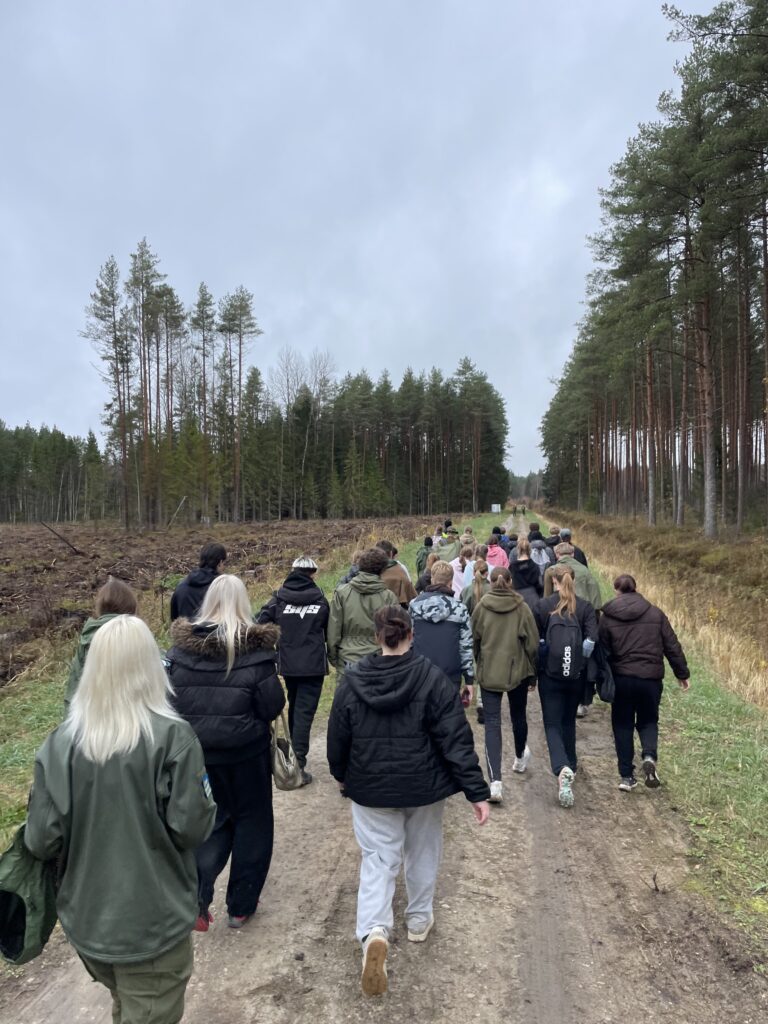
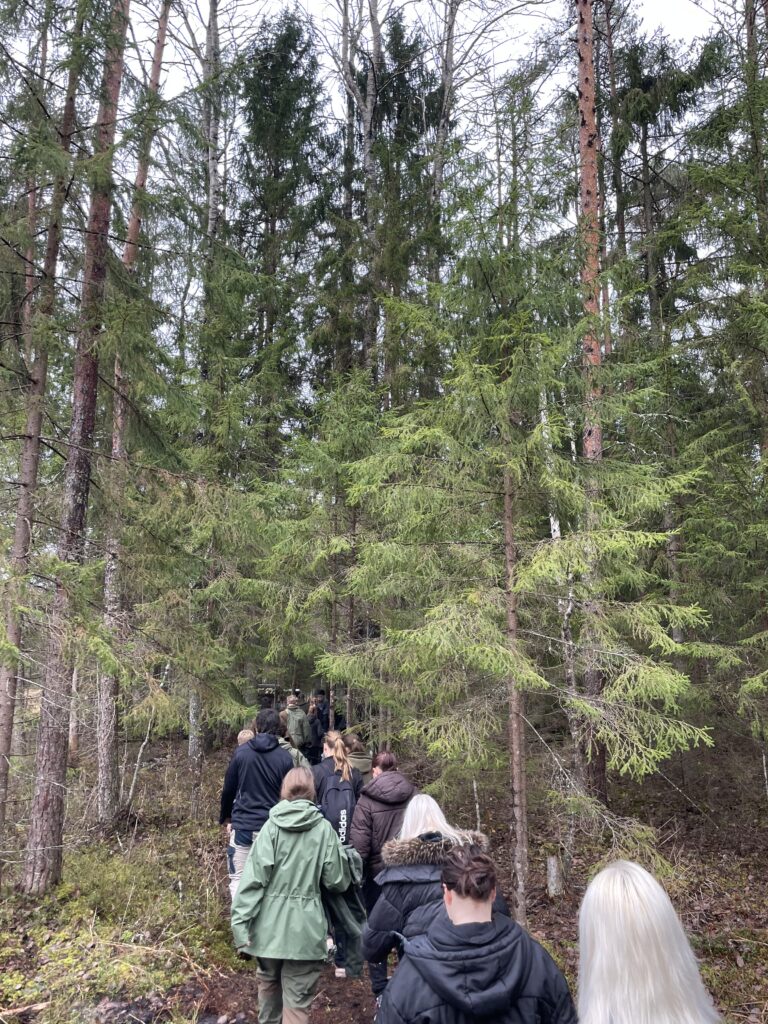
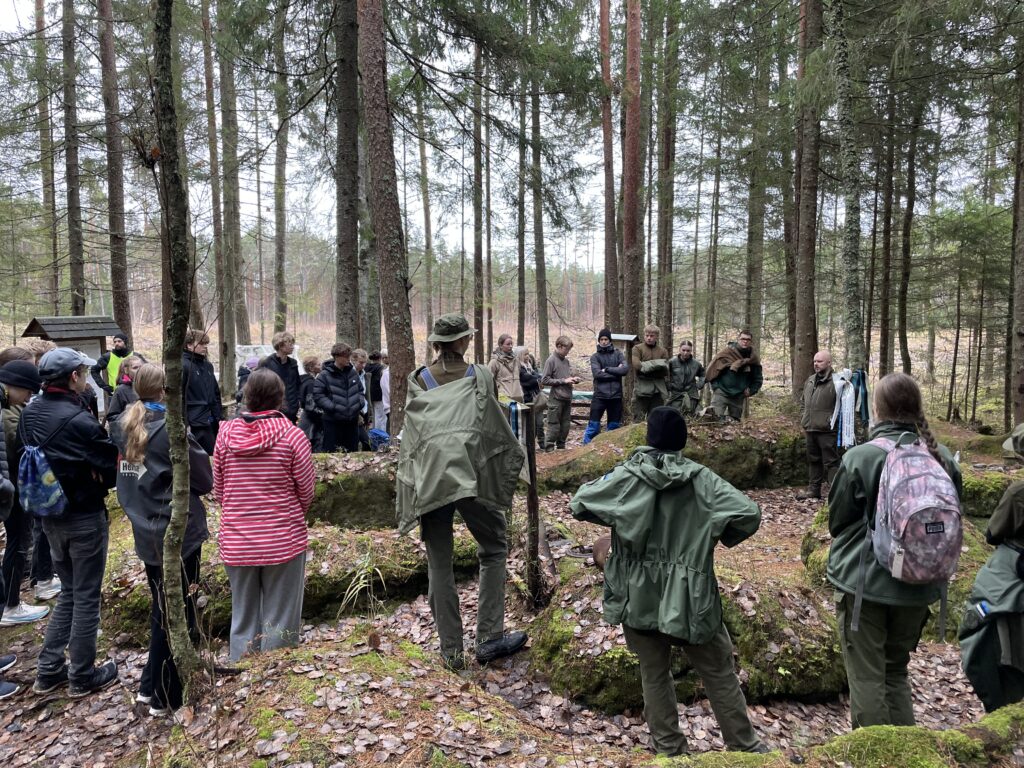
One of the highlights of the autumn school was a hike to the site of the Põrgupõhja Forest Brothers bunker in the forests of Vigala. Visiting the site allowed participants to gain a better understanding of the living conditions and difficulties faced by those who remained in hiding for extended periods. The Forest Brothers movement was not solely about armed resistance. Living in the forests required constant preparedness for possible security operations, the ability to obtain food and other essential supplies, and the resilience to survive under difficult circumstances.
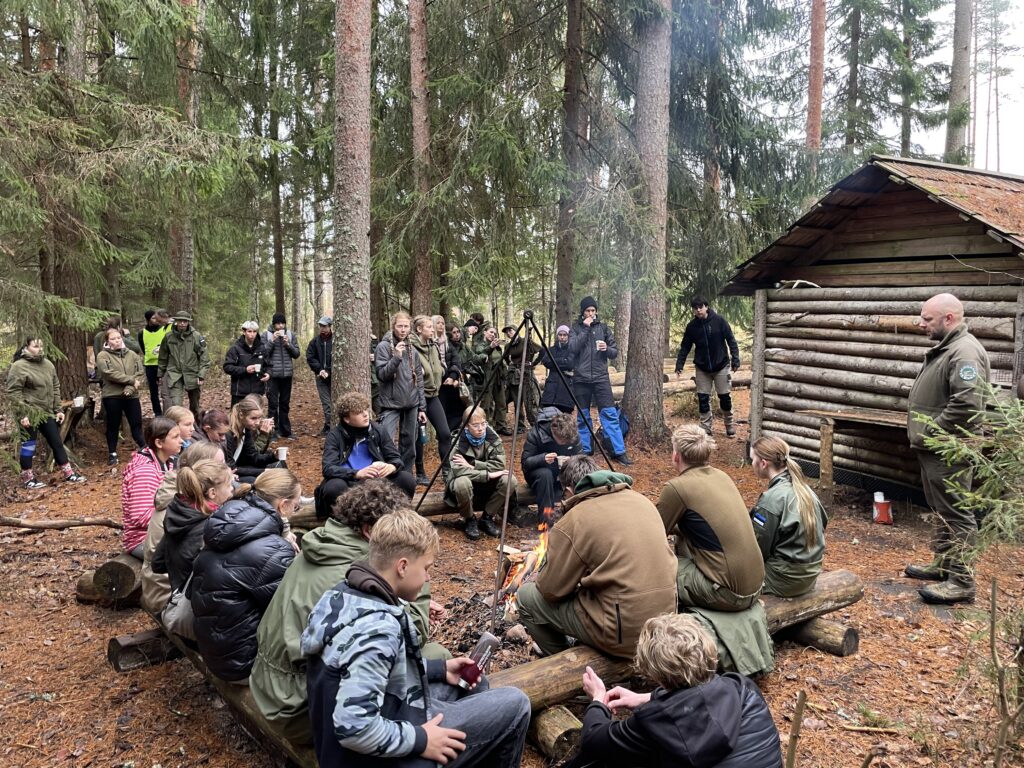
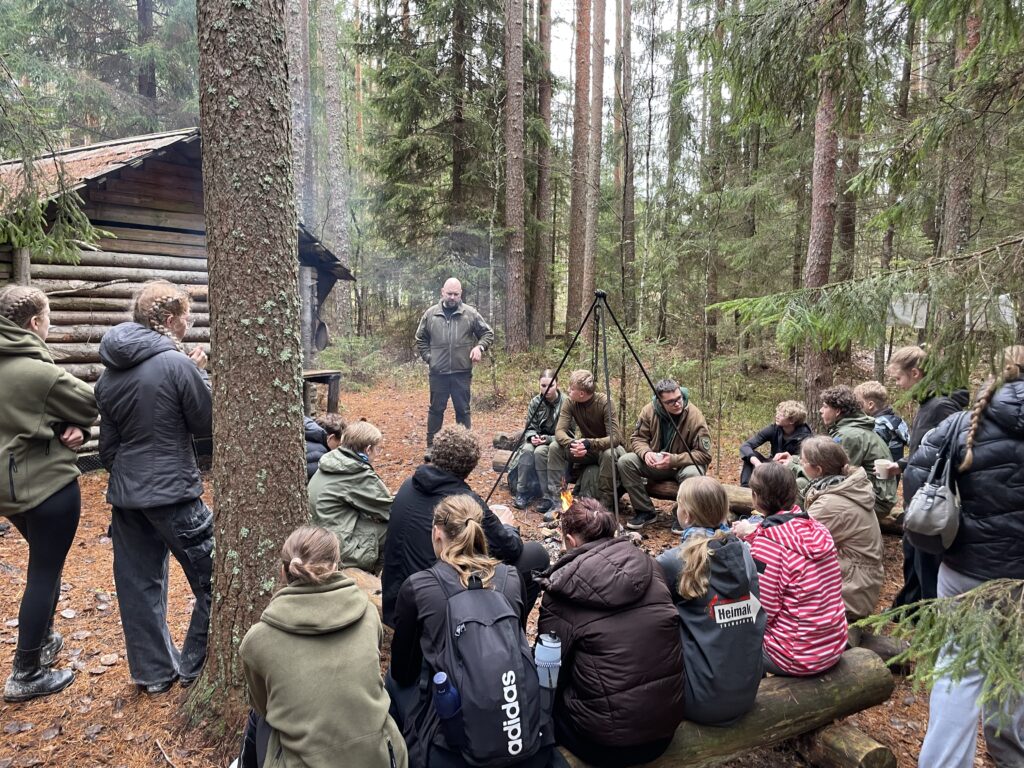
The survival skills required by the Forest Brothers also provided an opportunity to address contemporary crisis preparedness. Marje Verbo and Liina Riismaa from the Women’s Voluntary Defence Organisation (Naiskodukaitse) conducted a civil protection workshop focusing on emergency preparedness and the principles of self-reliance in crisis situations. Riina Gutmann from the Estonian Defence League (Kaitseliit) provided practical first aid training, while Erle Vainjärv from the Estonian Defence Resources Agency gave an overview of Estonia’s national defence system, military training and opportunities for young people to contribute to national defence.
In addition to lectures and workshops, the programme included various activities requiring teamwork and cooperation. During an orienteering exercise in Vana-Vigala, participants completed tasks at different checkpoints. Group assignments focused on topics related to the Forest Brothers, while a creative project involved producing short videos on the subject, which were subsequently screened and discussed together. The evening programme included film screenings and group activities.
The Forest Brothers movement formed part of the broader resistance to Soviet occupation. Understanding its history requires knowledge of both the political and social circumstances of the period and the choices available to individuals living under those conditions. The autumn school sought to combine historical knowledge with firsthand experiences and practical activities, offering participants a comprehensive understanding of this period in Estonian history.
With more than 80 applicants, the programme demonstrated continued interest among young people in Estonia’s recent history and the history of resistance to occupation.
The Forest Brothers Autumn School was made possible through the generous support of the Estonian Association of Former Forest Brothers.
We extend our sincere thanks to all participants, instructors and cooperation partners!